
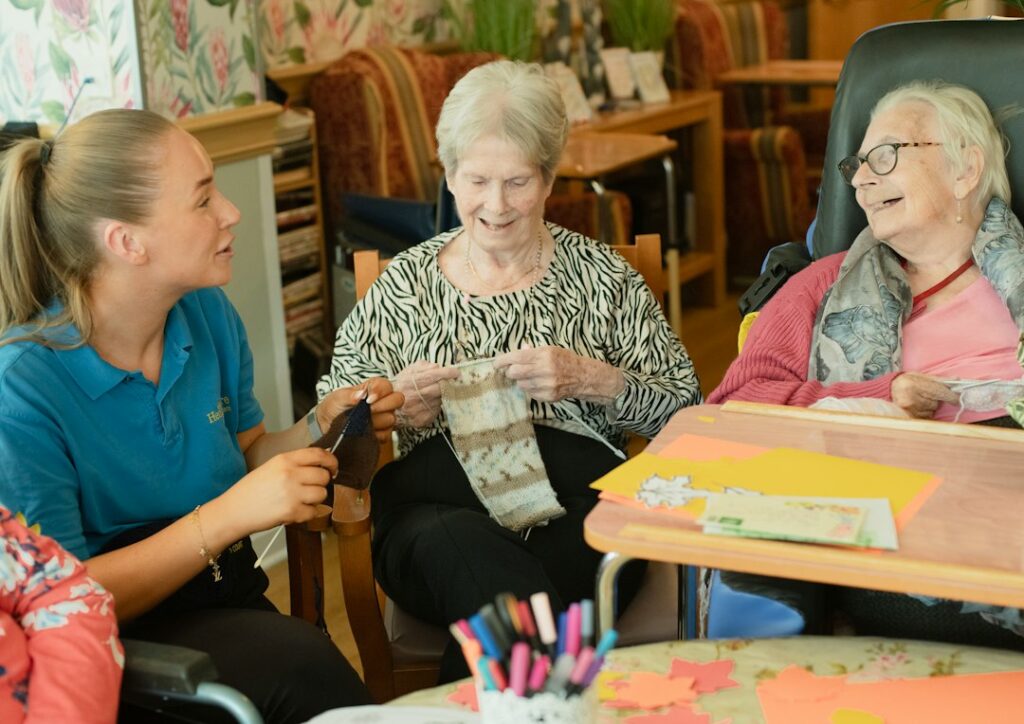
Intergenerational activities bring older adults and younger people together for shared experiences, conversation, learning, and play. In assisted living, these activities can support emotional well-being, cognitive engagement, physical movement, and a stronger sense of belonging.
For residents and families in Bellefonte, intergenerational programming may be especially meaningful because many households live across generations or remain connected through extended family relationships. Even when relatives cannot visit regularly, planned activities can create positive contact with children, teenagers, and young adults from the surrounding community.
What are intergenerational activities?
Intergenerational activities are organized experiences that involve people from different age groups. In assisted living, they may include visits from children, shared arts projects, reading sessions, seasonal events, gardening, music, games, or conversations about local history.
The activity itself does not need to be complicated. A resident and a child might color together, assemble a simple puzzle, decorate cookies, look through photographs, or talk about favorite animals. The value often comes from the shared attention and opportunity to connect.
Successful programs generally provide structure while allowing participants to interact naturally. Staff members may prepare conversation prompts, adapt materials for different abilities, and make sure the setting is comfortable for everyone.
How can these activities benefit older adults?
Intergenerational contact can help reduce loneliness and create regular opportunities for meaningful social interaction. A resident may feel useful when sharing a skill, answering questions, reading aloud, or encouraging a younger participant.
Potential benefits include:
- More frequent social connection and conversation
- Greater variety in the daily routine
- Opportunities to share memories, traditions, and practical knowledge
- Emotional enjoyment through laughter, play, music, or storytelling
- Increased motivation to participate in group activities
- A stronger sense of purpose and contribution
These benefits are not automatic. The quality of the interaction matters. Activities should respect residents’ preferences and avoid treating older adults as passive recipients of entertainment. Many residents enjoy being teachers, mentors, storytellers, artists, or problem-solvers.
Can intergenerational activities support memory and thinking?
Yes. Shared activities can encourage attention, language, recall, planning, and problem-solving. A resident might remember the rules of a childhood game, explain how to plant seeds, identify songs from an earlier period, or describe how household tasks were completed in the past.
These experiences may be helpful for residents living with memory loss, but they should not be presented as a cure or guaranteed treatment. Cognitive changes differ from person to person, and an activity that works well for one resident may be frustrating for another.
Helpful adaptations include:
- Using familiar objects, songs, photographs, or stories
- Keeping instructions short and clear
- Offering choices instead of demanding a specific response
- Allowing extra time for communication
- Avoiding correction when a resident is confused
- Focusing on enjoyment rather than performance
For a resident with dementia, calm activities with predictable steps are often easier than crowded or noisy events. Younger participants may also need guidance about how to communicate patiently and respectfully.
What can younger participants learn?
Intergenerational programs benefit younger people as well as older adults. Children and teenagers can develop comfort with aging, disability, communication differences, and family history. They may learn that older adults have varied interests, personalities, talents, and opinions.
A resident who teaches card games, demonstrates knitting, discusses farm or household routines, or shares memories of past community life can provide knowledge that is difficult to gain from books alone. Young participants may also practice listening, turn-taking, patience, and empathy.
These interactions can correct common misconceptions. Older adults are not all alike, and assisted living residents are not defined only by their care needs. Some may be lively conversationalists, while others may prefer quiet observation or one-on-one contact.
Which activities work well in assisted living?
The most effective activities match residents’ abilities, interests, and energy levels. Options can include:
Reading and storytelling
Children can read short books with residents, or residents can share stories from childhood. Large-print materials, picture books, poetry, and familiar songs can make participation easier.
Music and rhythm
Singing, simple instruments, movement to music, and listening sessions can bring different age groups together without requiring extensive conversation. Familiar music may also encourage memories and emotional expression.
Arts and crafts
Painting, collage, seasonal decorations, paper crafts, and simple building projects can be adapted for different physical abilities. Projects should emphasize participation rather than producing a perfect result.

Gardening and nature activities
Planting seeds, arranging flowers, sorting leaves, or observing birds can provide sensory stimulation and gentle conversation. Outdoor activities may need adjustments during hot, cold, wet, or icy weather, which can affect plans in central Pennsylvania.
Games and puzzles
Bingo, matching games, board games, card games, and simple puzzles can support turn-taking and problem-solving. Rules may be modified so residents and younger participants can enjoy the activity at different skill levels.
Technology and life-story projects
Older adults may enjoy learning about a young person’s favorite technology, while younger participants can help create a recorded story, photo album, or family-history display. Privacy and consent should be addressed before recording or sharing personal information.
How should assisted living communities make these programs comfortable?
Good planning helps prevent intergenerational events from becoming overwhelming. Activities should take place in spaces with adequate seating, clear walkways, manageable noise, and access to restrooms. Residents should be able to leave or take a break without embarrassment.
Timing also matters. Some residents are more alert in the morning, while others participate more comfortably after lunch. Visits should account for meals, medication routines, transportation, seasonal weather, and the possibility that younger participants may become tired or distracted.
Staff members should prepare both age groups for the visit. Younger participants may need reminders to speak clearly, ask before touching, and avoid assuming that a resident needs help. Residents should not be pressured to hug, talk, perform, or participate in every activity.
Family members can help by describing a resident’s interests, preferred communication style, and potential triggers. A quiet resident may enjoy sitting near a group without speaking much. That can still be a successful form of participation.
What common mistakes should be avoided?
Intergenerational programming can fall short when it is treated as a photo opportunity rather than a genuine relationship-building activity. Several problems are avoidable:
- Scheduling events without considering residents’ energy levels
- Making activities too long or overly complicated
- Assuming every resident enjoys being around children
- Using babyish materials or language with older adults
- Failing to supervise interactions
- Ignoring hearing, vision, mobility, or memory-related needs
- Expecting residents to share personal stories
- Measuring success only by attendance
A smaller activity with thoughtful preparation may be more meaningful than a large event with little opportunity for conversation. Residents should have choices, and participation should remain voluntary.
How can families encourage intergenerational connection?
Families can support these experiences by sharing age-appropriate photographs, recipes, music, stories, or simple projects. Visits do not need to be lengthy. A consistent fifteen-minute activity may be easier and more rewarding than an occasional long visit.
Families should also watch for signs of fatigue or overstimulation. A resident may enjoy the first part of a visit but need quiet time afterward. Children may need breaks, snacks, or a change in activity. Flexibility allows the interaction to remain positive.
Intergenerational activities work best when they are built around mutual respect. Older adults offer experience, memory, humor, skills, and perspective. Younger people bring curiosity, energy, creativity, and new interests. In assisted living, that exchange can make daily life feel more connected and socially meaningful.
