
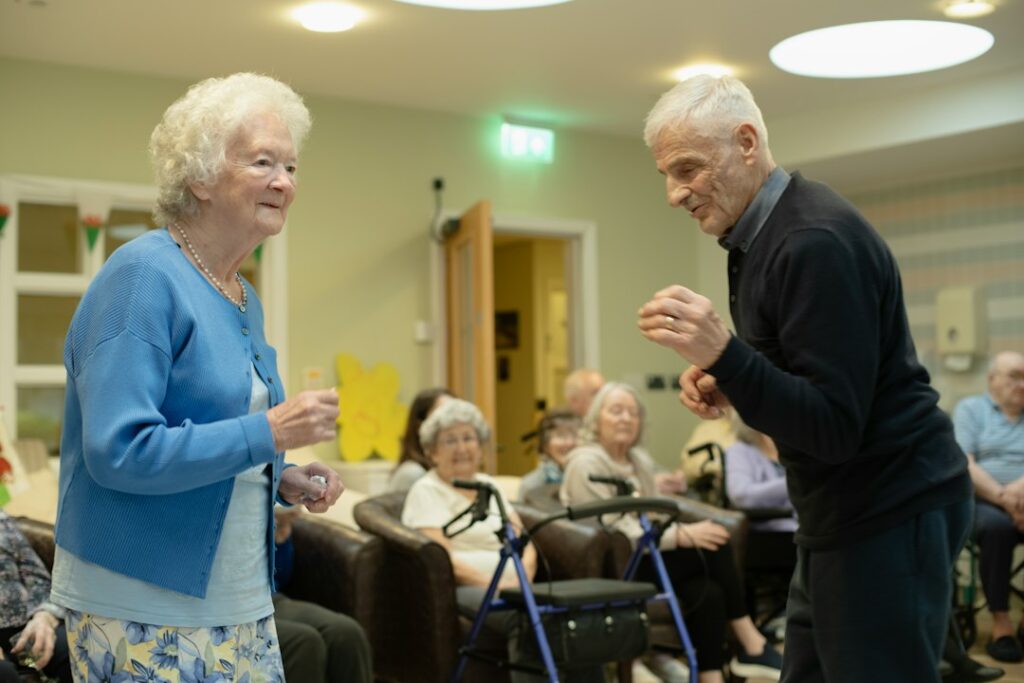
Assisted living can support senior mobility by combining safe surroundings, regular movement, personal assistance, and opportunities to remain socially engaged. The goal is not simply to help residents get from one place to another. It is to help them preserve strength, balance, confidence, and participation in everyday life.
What does mobility mean for older adults?
Mobility includes more than walking without assistance. It also involves standing from a chair, getting in and out of bed, moving through hallways, using stairs safely, bathing, dressing, and participating in activities outside the apartment.
A person may be considered mobile even when using a cane, walker, wheelchair, or another mobility aid. Maintaining mobility means supporting the safest and most independent level of movement possible rather than expecting every resident to walk unaided.
Mobility often affects other areas of health. People who can move comfortably may be more likely to attend meals, socialize, exercise, manage personal routines, and spend time outdoors. Reduced movement, by contrast, can contribute to muscle weakness, stiffness, loss of confidence, and greater fall risk.
How does assisted living encourage daily movement?
Assisted living settings are generally designed so that residents have reasons to move throughout the day. Dining areas, activity rooms, lounges, courtyards, and mail areas may provide short, manageable destinations.
This type of movement can be valuable because it is built into normal routines. A resident might walk to a meal, join a group activity, visit a common area, or take part in a scheduled exercise session. These short trips may be more realistic and sustainable than relying only on occasional formal workouts.
Staff support can also help residents avoid unnecessary inactivity. Assistance may include reminders to attend activities, help with dressing or transferring, or supervision during movement when balance or endurance is limited. The appropriate amount of help varies from person to person.
Too much assistance can sometimes lead to dependence if a resident is capable of completing part of a task safely. Good mobility support encourages residents to do what they can while receiving help with the portions that present genuine difficulty.
Can assisted living improve strength and balance?
It can provide more consistent opportunities for strength and balance work, although results depend on a resident’s health, participation, and individualized plan. Activities may include seated exercises, supervised walking, gentle stretching, balance practice, or movements that strengthen the legs and core.
Strength is especially relevant to everyday tasks. Leg strength helps with standing from a chair, stepping over thresholds, and maintaining control during transfers. Balance exercises may help a resident respond more effectively to changes in direction or uneven surfaces.
Exercise should be adjusted for medical conditions, pain, fatigue, vision changes, and previous injuries. A person who has recently fallen or experienced a major health change may need guidance from a qualified healthcare professional before beginning or changing an exercise routine.
What environmental features support safe mobility?
The physical setting can either encourage movement or create barriers. Helpful features may include:
- Clear, well-lit hallways
- Handrails in suitable areas
- Seating where residents can rest
- Flooring that is even and well maintained
- Adequate space for walkers and wheelchairs
- Bathrooms with grab bars and accessible layouts
- Dining and activity spaces that are easy to reach
- Visual contrasts that help residents identify doors, edges, and changes in flooring
Lighting is particularly important for residents with reduced vision. Glare, shadows, and dim areas can make it harder to judge distances or identify obstacles.
For households in Bellefonte, seasonal conditions deserve attention as well. Snow, ice, wet leaves, and tracked-in moisture can make outdoor and entryway surfaces hazardous. Mobility planning should account for weather, footwear, transportation arrangements, and whether an outdoor route is safe on a particular day.
How do mobility aids fit into assisted living?
Canes, walkers, wheelchairs, and transfer devices can help residents move more safely, but they need to be used correctly. An improperly adjusted walker or a cane held on the wrong side may increase instability rather than reduce it.
Residents and families should understand how a mobility aid is intended to be used, where it should be stored, and whether it is suitable for indoor and outdoor surfaces. Brakes on wheelchairs and rollators should be used during transfers when appropriate, and pathways should remain clear of loose rugs, cords, and clutter.
A mobility aid does not automatically mean that a person is losing independence. In many cases, the right device allows a resident to continue participating in meals, activities, family visits, and personal routines with less risk.
Does social activity affect mobility?
Yes. Social engagement can indirectly support physical movement because it gives residents a reason to leave their apartments and interact with others. Group programs, shared meals, games, music, crafts, and discussion groups may encourage walking, reaching, standing, or changing positions.
Social connection may also improve motivation. Someone who is reluctant to exercise alone may be more willing to join a group or take a short walk with another person. Participation can help reduce the fear that movement must be strenuous to be useful.
Activities should be flexible enough to include people with different abilities. A resident who cannot stand for a full program may still participate from a chair, use adapted equipment, or take part for a shorter period.

How can families help protect a resident’s mobility?
Families can support mobility by focusing on ability rather than assuming that every task should be done for the resident. Useful questions include:
- What activities does the resident still perform independently?
- When is assistance necessary, and when is supervision enough?
- Has walking, balance, endurance, or confidence changed recently?
- Are pain, dizziness, medication effects, or vision problems affecting movement?
- Does the resident have properly fitted footwear and a suitable mobility aid?
- Are there specific goals, such as walking to meals or standing safely from a chair?
Changes in mobility should be communicated promptly to the care team and the resident’s healthcare providers. A sudden decline, repeated falls, new weakness, severe dizziness, or unexplained difficulty walking may require timely medical evaluation.
Families can also help by bringing comfortable, supportive shoes and clothing that allows safe movement. Footwear should fit securely, have a stable sole, and avoid loose backless styles that can slip during walking.
What should someone ask when evaluating mobility support?
Before choosing an assisted living setting, residents and families can ask how mobility is assessed and supported. Questions might include:
- How are walking ability, fall risk, and transfer needs evaluated?
- Are exercise or movement programs available for different ability levels?
- How are care plans updated after a fall, illness, or hospitalization?
- What assistance is available during meals, bathing, and activities?
- Are outdoor paths and entrances usable during rain, snow, and ice?
- How are walkers, wheelchairs, and other equipment accommodated?
- How does staff encourage independence while maintaining safety?
The most useful answer is usually specific. A clear explanation of daily routines, safety procedures, and individualized support provides more insight than a general statement that residents are encouraged to stay active.
Mobility in assisted living is best understood as an ongoing partnership among the resident, family, caregivers, and healthcare professionals. With appropriate support, many older adults can continue moving through daily routines, using needed equipment, joining community life, and maintaining a meaningful level of independence.
